
Rumpelstiltskin Dog Video: Put Your Pet in the Tiptoe Meme
Make a Rumpelstiltskin dog video from two photos: our golden retriever test, the pet photo recipe that works, and what to know before you post.
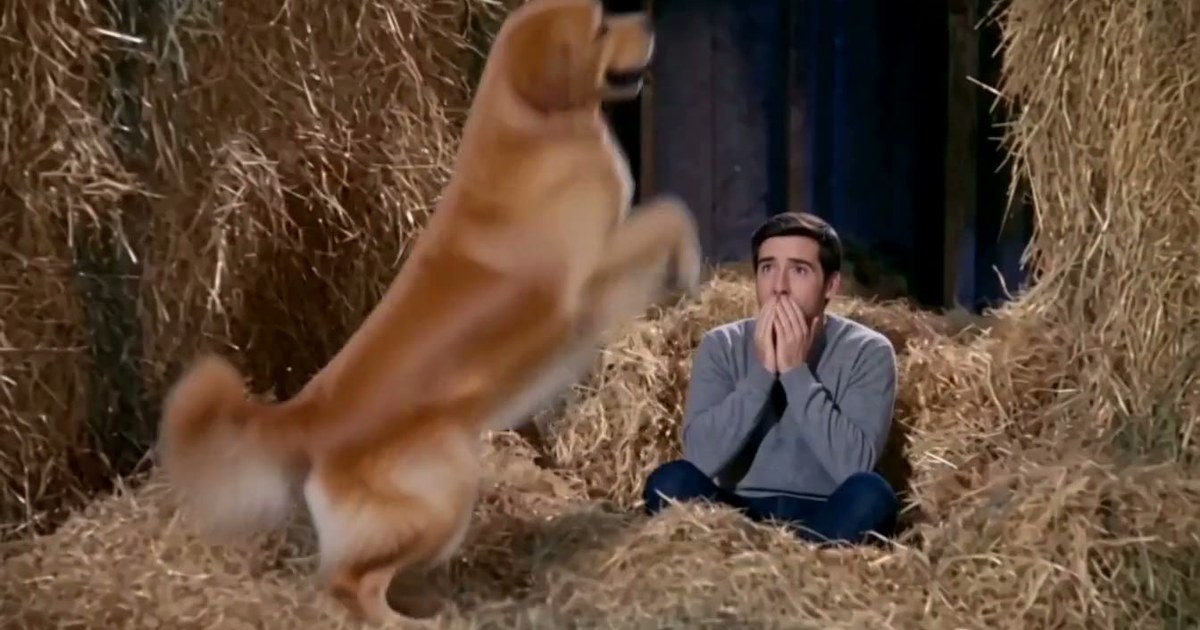
The little imp from the candlelit barn has company now. Scroll the trend for more than a minute and you will find him with a wet nose: dogs standing in for the dancing character while their humans play the stunned watcher. A Rumpelstiltskin dog video is made the same way as the human version, from two photos and a 12-second scene, and it might be the funniest branch of the meme, because nothing prepares you for a golden retriever doing a two-legged tiptoe across straw.
This post is the pet edition of our step-by-step guide. We ran a golden retriever through the Rumpelstiltskin AI studio to see whether the pet version lives up to the idea, share the result below, and distill what we learned into a photo recipe you can follow with your own dog, cat, or whatever animal rules your house.
Why dogs work so well in this meme
The scene has two roles, and that structure is a gift to pet owners. One character dances: the imp, tiptoeing across the barn as straw turns to gold under his feet. The other character watches: the princess, seated by the hay, reacting as the impossible happens in front of her.
Cast your dog as the imp and the joke writes itself. The dance was choreographed for a small, spry humanoid, so watching a large, extremely serious golden retriever perform it with total commitment is the exact mismatch that makes people replay a clip. Meanwhile the human half of the meme finally gets its spotlight. The watcher's stunned face is half the comedy in the original, and in the pet version it is your face, reacting to your own dog.
Dog versions have been multiplying on TikTok for weeks now, usually buried inside compilations or posted by creators with editing setups. The pet branch is popular, but until recently it was not easy to join.
Our golden retriever test
We generate our examples with the same pipeline every user runs, so we put a golden retriever in the imp slot and a man in the princess slot and pressed generate. Here is what went in:
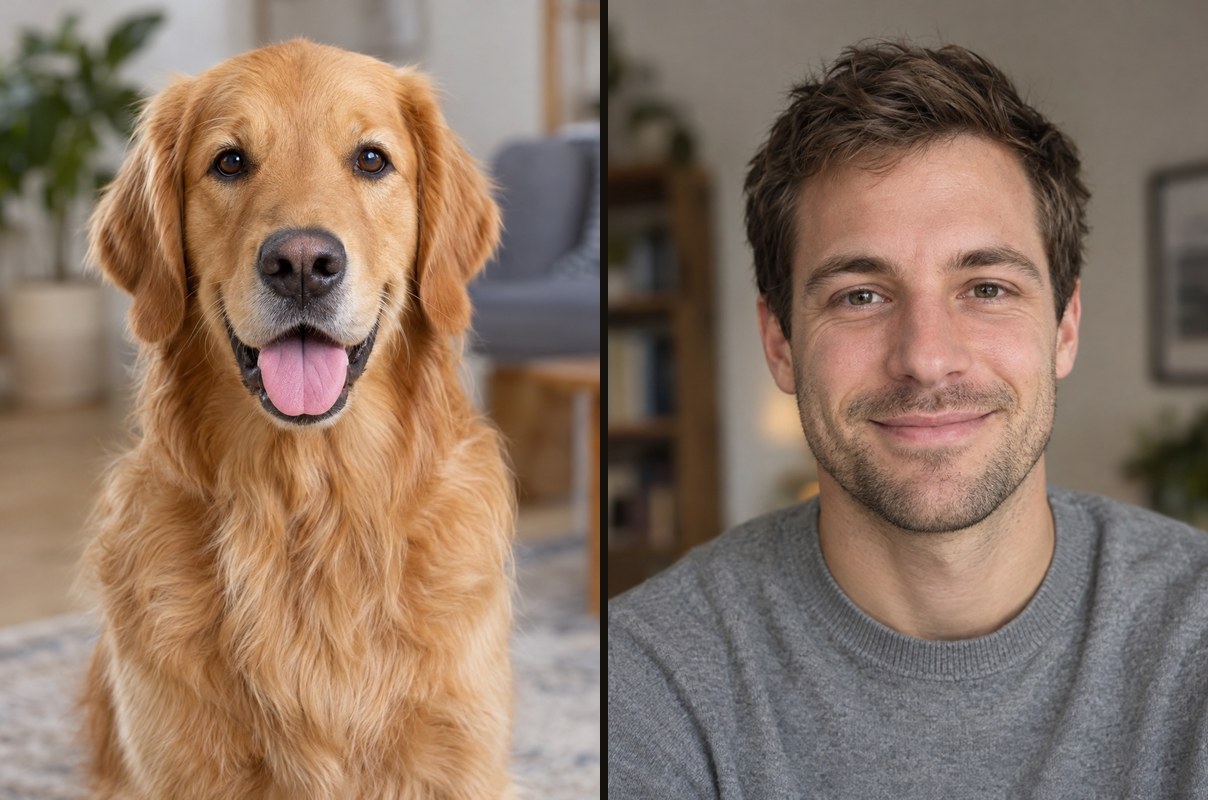
What went in: the imp slot (left) and the princess slot (right), two ordinary portraits in living-room light.
Two ordinary portraits, shot straight on, in ordinary living-room light. No barn, no costume, no editing. The people in the photos are AI-generated for the same reason our other examples are: we do not post real customers' or real people's faces in marketing material.
And here is a frame from what came out, twelve seconds later:
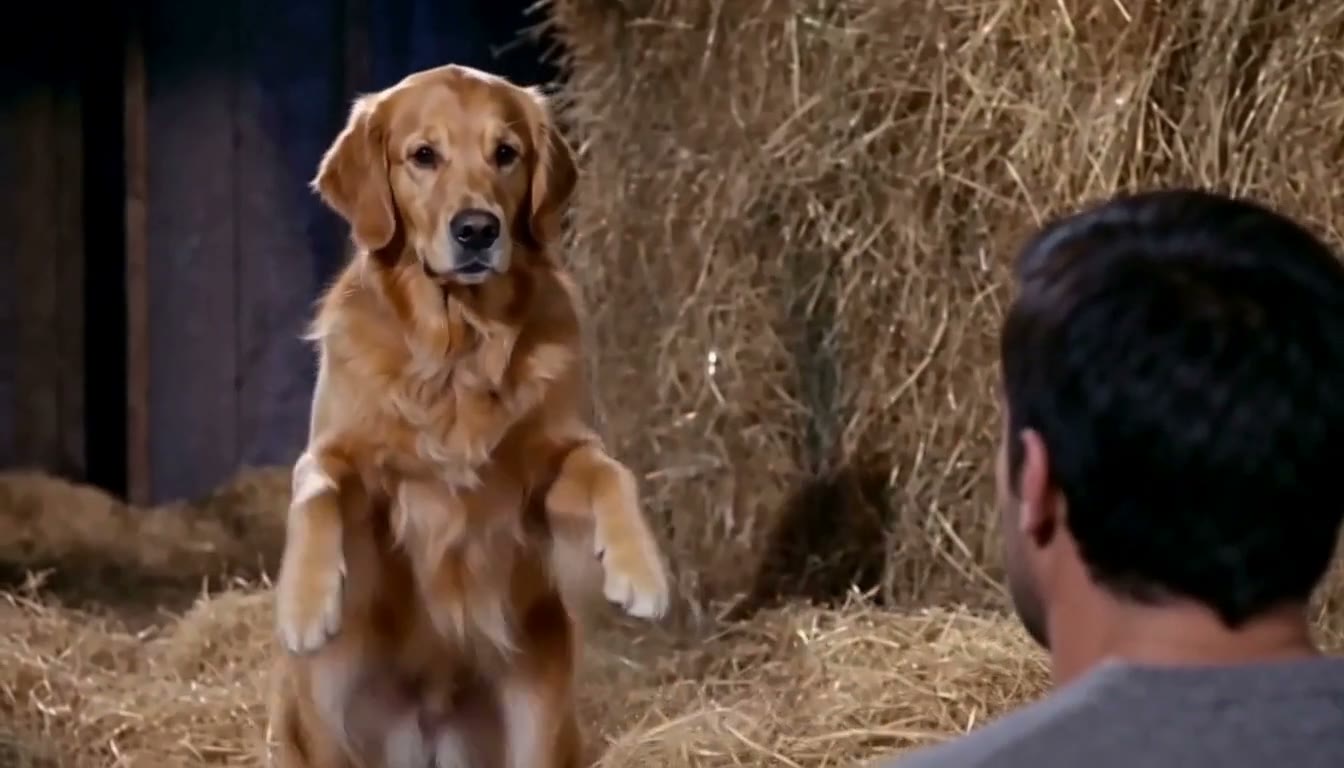
What came out: the same golden retriever, upright and mid-tiptoe, while the watcher reacts on cue.
The dog keeps his face, his coat, and his general air of being a very good boy. What changes is everything else: he is upright, on two legs, picking his way across the barn on tiptoe while the straw gilds over, and the man, who kept his gray sweater from the source photo, has his hands over his mouth in exactly the reaction the scene calls for. You can play the full clip in the examples section on our homepage.
One production note, because we score our own tests honestly: the dance reads best in the first two thirds of the clip, where the tiptoe steps are crisp. Every AI video has a strongest beat. Ours was the middle; yours will differ, and it is worth knowing your beat before you pick a poster frame.
The pet photo recipe
The recipe barely differs from the human one, and the differences are all in your favor:
- Full body if you can get it. Stand your pet out on the floor, sit them straight, and shoot level with their eyes. In our test the dog came from a chest-up portrait and worked fine, because a pet carries no costume beyond its coat and collar. The full-body rule matters most for the human in the second slot, whose shoes and trousers become part of what they wear in the barn.
- Ears fully visible, eyes bright and clear. The model reads ear shape and eye light the way it reads a human face and hairstyle. Backlit, shadowy pet photos are the number one cause of a mushy likeness.
- Straight on, centered, calm pose. A sit or a stand, facing the camera. The dance motion comes from the scene template, so the photo does not need action; it needs a clear, front-facing subject.
- Even, warm light. Indoors by a window is perfect. Hard noon sun and dim night shots both fight the candlelit grade of the scene.
- Leave the collar on if you want it in the video. It transfers like a piece of clothing, and a collar in the barn is a nice touch of "this is really my dog".
The one prompt change to make
The scene prompt already accepts animals: its cast line reads "the people (or pets)". Naming the animal in the role mapping steadies the result further. Swap the first role line for this:
- <Picture 1> takes the role of the imp (a dog).
That single word does the work: it tells the model a quadruped is about to go bipedal, which is exactly the gag. The full prompt, line by line, is published on our prompts page along with the other variations, including the Halloween edition that started as a vampire count and a ghost hunter.
In the studio you do not need to touch the prompt at all; it ships wired in, and the pet wording above is what our generator sends. You only place the two photos on the correct sides: dancer left, watcher right.
What carries over from the photo
Likeness transfers are the whole trick of this meme, so it helps to know what the model takes from each picture. From your pet: face, coat color and pattern, ear set, and anything worn, like a collar or bandana. From the human: face, hairstyle, body shape, and clothing head to toe. Neither character keeps anything from the original scene's cast.
What does not transfer is temperament. Your couch-loving basset hound will still nail the choreography, and your hyperactive terrier will still sit through the entire shoot, because the shoot is one photo.
Before you post it
Three things worth a minute of your time. First, label it as AI when the platform asks, or say so in the caption. The meme runs on a "is this real?" confusion that is funny for a week and corrosive for longer; our view on labeling before posting is simple: never answer "is this real?" with yes. Second, nothing happens to any real animal in this process; the video is generated from a still photo, which makes it safe, and also means you should not cast other people's pets without asking. Third, add Riff Raff's "TIP TOE WING IN MY JAWWDINZ" in TikTok, Reels, or Shorts after you download; the clip ships without a music track, and the song is the meme's heartbeat.
FAQ
Do Rumpelstiltskin AI videos work with dogs?
Yes. The scene accepts pets in the dancing role, and the golden retriever test above came out of the standard two-photo pipeline. It is the same twelve seconds, the same barn, and the same straw-to-gold beat, with a dog at the center of it.
What photo of my pet works best?
Full body, straight at the camera, ears fully visible, eyes bright, sitting or standing straight, in even light. If all you have is a good chest-up portrait, it can work for a pet, as it did in our test. Save your best full-body shot for the human in the second slot.
Does it work with cats?
The pipeline takes any pet, and cats have the same deadpan fit for the part. Our published examples are dogs, so expect a bit more trial and error with a cat before you get a keeper. The photo recipe is identical.
Will making a video hurt or scare my pet?
No. Nothing touches the animal. The entire video is generated from a single still photo, so the scariest thing your pet experiences is you saying "hold still" one more time.
How much does a pet video cost?
The same as any video on the site: Basic output is 120 credits at 768P or 180 at 2K, and Premium runs 170 to 800 depending on resolution. Credit packs start at $19.90 for 400 credits, the credits never expire, and confirmed failures refund automatically. The pricing page has the full table.
Can I cast two pets instead of a pet and a person?
Both slots accept pets, so a cat-and-dog standoff is possible. Our tested examples pair a pet with a person, so treat a two-animal cast as an experiment: keep both photos crisp and front-facing, and expect to run it more than once.
If your dog has been waiting for a callback, this is the trend to get them into. Upload two photos in the studio, keep the photo recipe open while you shoot, and give your pet the dance floor before the meme moves on to its next costume.
You can go deeper on the format with the full how-to guide, meet the fairy-tale con artist behind it in the meme explainer, or settle the "is it a real movie?" question with the 1987 fact-check.